
14th January 2022
If you’re happy and you know it, and you really want to show it…you might want to show your country’s WHI not HDI! But what does that mean!?
Well, ‘HDI’ is ‘Human developmental Index’ and is an interesting way to measure a countries development the top 5 in 2019 (maximum 1) being Norway (0.957), Ireland (0.955), Switzerland (0.955), Hong Kong (0.949) & Iceland (0.949). These extremely high levels of development show strong economic power of the country (GDP), the life expectancy and number of years in education. This can point towards the material wealth of life and stability of the country but it can severely miss out on the quality of life in the people. In general high HDI countries do enjoy a much more comfortable lifestyle than that of lower HDI due to higher social mobility and access to resources but, these societies may also be riddled with stress, anxiety and rushed lifestyle. Kind of like my Mum doing the washing but like 10 times worse!
An interesting measure to give an even deeper view into how well a society & country functions is the ‘World Happiness Index’ or ,you guessed it, ‘WHI’. Of course this is very subjective on first glance, however the ‘World Happiness Report‘ takes into account 6 criteria that can be measured: GDP per capita, social support, healthy life expectancy, freedom to make life choices, generosity, and freedom from corruption.
The top (out of 10) 5 happiest countries according to this would be: Finland (7.742), Denmark (7.620), Switzerland (7.571), Iceland (7.554) & Netherlands (7.464). With Norway not far behind. When factoring this in we can see that Ireland drops way down in 15th and Hong Kong to 75th. This can be intuitively understood that HDI does not capture the real quality of life of those individuals…the happiness shows it. Sorry leprechauns your pot of gold doesn’t cut it after all.
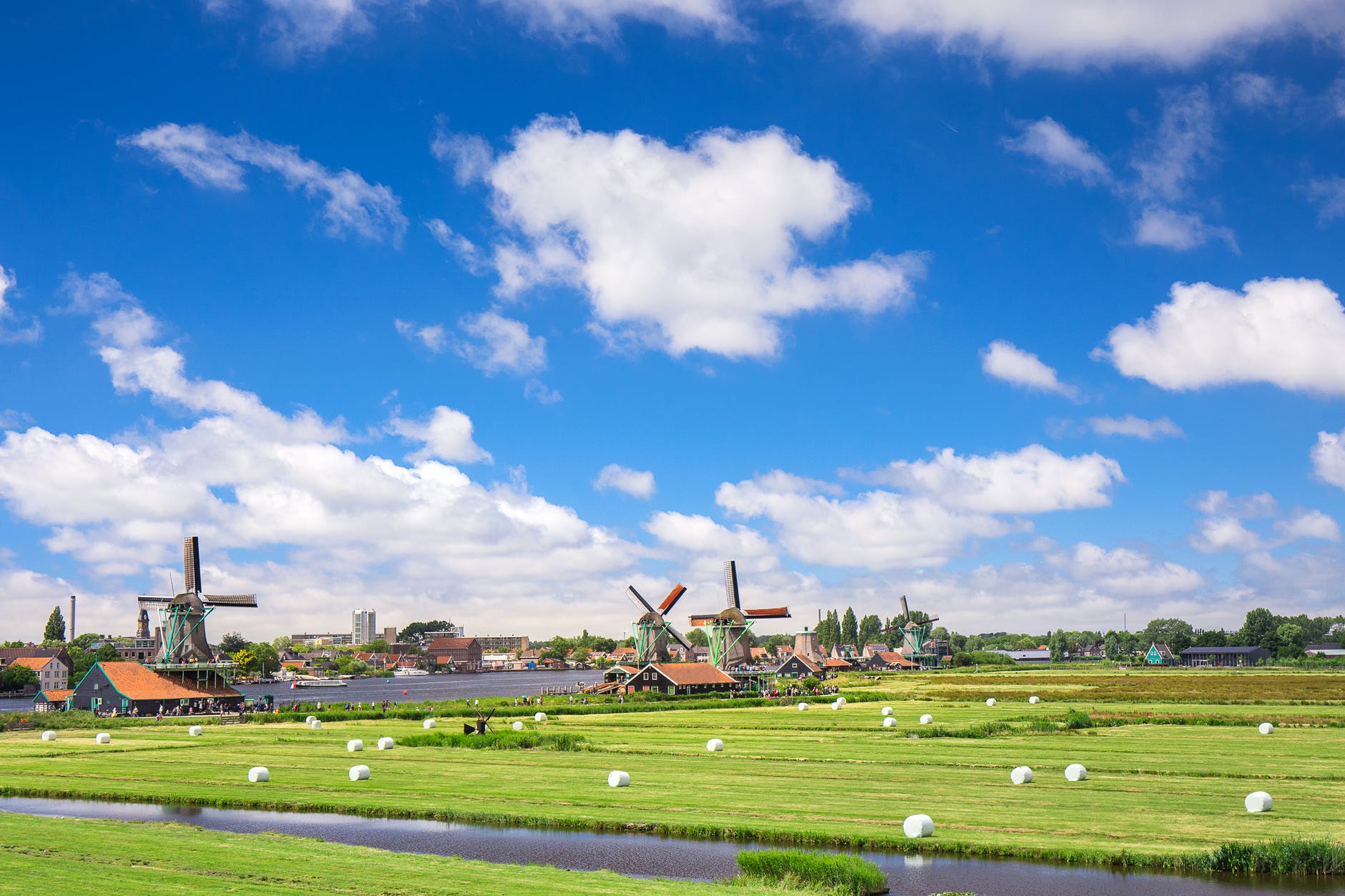
Even higher still than Norway in HDI are the Dutch regions of Utrecht (0.996) and Nord Holland (0.963). When combined with the 5th highest WHI, it theoretically sounds like a great place to live. Anecdotally, having grown up in the province of Nord Holland there is a distinct way the society functions that does make it easier for families to function and the atmosphere just feels lighter than in other societies. Of course depression, stress and anxiety still exists but on a whole these societies operate strong economically and are prospering socially. Meanwhile while I was working in Hong Kong I saw the many technological advancements with an amazing GDP & top Universities to match. However cramped living conditions & stressful lifestyles do no favour happiness & quality of life. In other words the capital material gain did not balance with redistribution from social policies.
What do these counties with high HDI & happiness get right? The balance of capitalism and socialism. Money comes in through a strong economy attracting foreign businesses and innovation therefore local jobs. Higher salaries because of this, allows the government to raise higher taxes. Which in return, distributes and recirculates money. Hence, rich resources and infrastructure are brought into country through socialized policies. Working hand in hand with traditionally, capitalism policies. This balance and mix of policies creates a way to get the best of both worlds. And you don’t need rocket science to get between them…just social science.
Schools in England are competitive and hence segregated. Grammar schools require richer parents to may for children’s education and these children grow up to pay for their child’s premium education. The opposite is true for the poorer class. Often children mix with a certain social pool, develop social conditioning in their bubble. Hence disparity and alienation of each other deepens. A chasm develops in the society with many collective groups living in one country but never coming into contact with one another.
Meanwhile our Finnish friends have no private schooling at all! Rich parents and poorer alike send their kids to the same schools where children mix non competitively and collaborate. They learn to work with each other from a wider range of backgrounds and rich parents ensure the quality of the schools are up to their standard. Of course eventually schools becomes more or less the same level of quality! These kids spend more time on exploring rather than absorbing vast amounts of data for their entrance exams. Finns have the highest rate of high school completion in the world for a reason. This allows the best start possible for children no matter their social economic backgrounds. These policies are also a result of a deeper understanding within the society and a willingness to see each other as equal human beings.
Ultimately resulting in a large increase of social mobility and equality of opportunity for those who fall through the social safety nets while also still allowing for equality of outcome for those who indeed push far in economics and innovation. The Scandinavian model results in a culture that revers the education system and constantly feedbacks into their own; energy, medical, education and infrastructures. Of course problems can occur when people try to socialize policies without strong economic policies. Or indeed when a country prioritizes economic growth with poor recirculation and social policies. Or of course is a blind patriot of their country wanting to make it great again…
Therefore Happiness Indexing could be seen as more underlying ‘contentment and peace’ than just pure ‘happiness’. Even with a comfortable lifestyle populations may still face sadness rather than feeling happy all the time. Perhaps a positive emotion index would be a better representation of the emotional happiness. In this case people may feel generally ‘happier’ even though the country may not be as developed. Countries that rank (out of 100) so highly are found in the land of coco-beans and carnivals: South America, Panama (85), El Salvador (84), Guatemala (84), Paraguay (83) and Colombia (82).
And so the quest for happiness, peace and contentment may not necessarily be found by having vast amounts of economic growth and perfect social systems. Although having them not present at all would have an adverse effect. But it may be found more elusively weaved into the fabric of our connection to each other and where we are from.
So it may be important to remember as Heather Heying pointed out in a Jordan Peterson Podcast: To recognise that so much of modernity has been amazing for humanity. It has given us the level of comfort, connectivity and productivity that we have currently. We should not forget that when we point out this amazing rate of change that we ourselves have created, is itself deranging us. It makes it very difficult to understand how to be human and how to remember how to be human.
And so is it possible to keep up this great balance of development and happiness and not get sucked into our own world? Or even more important is it possible to sustain this growing human world, hungry for resources, with the natural world which had taken millions of years to balance delicately in ecosystems. Even removing one species from an ecosystem can collapse it. Our billions of exotic pills popped, digested and transported through our sewer system into the ocean for the fish that we will eventually eat again is just one example.
Could Homo Sapiens be the bacteria that proliferates, consumes and eventually has nothing left to eat? Will we crush ourselves under our own weight, living in our perfect bubble consuming unlimitedly from the outside which we do not see? If we are not aware of the progress train we are riding, the so called ‘Wise Man’ will not see the ecosystems collapsing behind him in his hungry stampede towards progress.
-Jhoty 🙂
 Jhoty
Jhoty 